

How To Draw Environment Concept Art
Introduction
Color Schemes are arrangements or combinations of colors used in illustration and design. When used on a design, color schemes are mostly used to describe local colors (colors of objects or material nether neutral lighting). Meanwhile, color schemes in illustrations are used to express mood or ambiance. Local colors in an illustration are all affected by the ambient colors. For example, Rien'southward blue-grey brim on her grapheme pattern (left) appears dark turquoise on the illustration (right) because it was affected by the green ambient light.
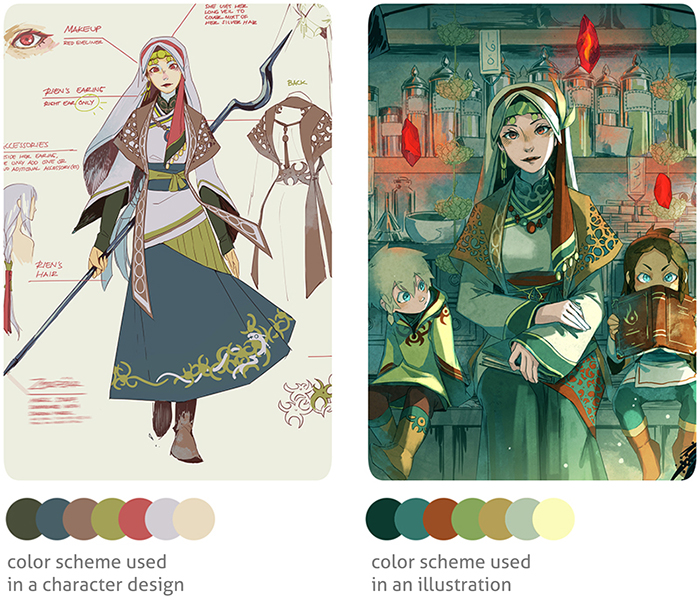
Digital artists are blest with thousands of colors available with just a click. And don't forget the almighty adjustment layers that nosotros all think can solve every coloring problem. While information technology is encouraged to apply those handy features for efficiency, at that place are really rules to follow and ignore. Here, I'll explain some bones knowledge of colors that tin help you lot cull better color schemes for your art.
Usages
Using harmonious color schemes help us prove a pleasing color combination. Colour schemes can also help us describe a certain mood to the viewer.
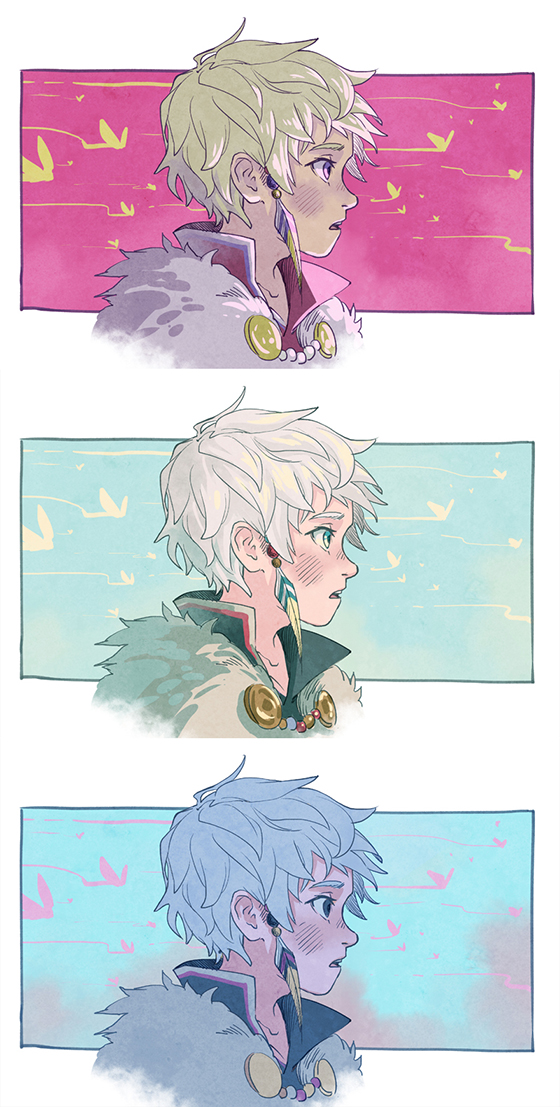
Tin can you feel different moods in these similar comic panels?
Color Theory
Color theory is well-nigh understanding how color combinations work and how colors are not always how we perceive them to be.
When placed close together, colors communicate with each other. Some are complementary, some make other colors popular, while some colors don't go well together, making both appear irksome as a consequence. Color theory shows usa that in that location are sure colour arrangements in a colour wheel that can come harmonious if put together in an artwork or design. Below is a familiar graphic showing color combinations that are harmonious based on color theory.
After looking at this graphic, harmonious color combinations seem pretty limited.
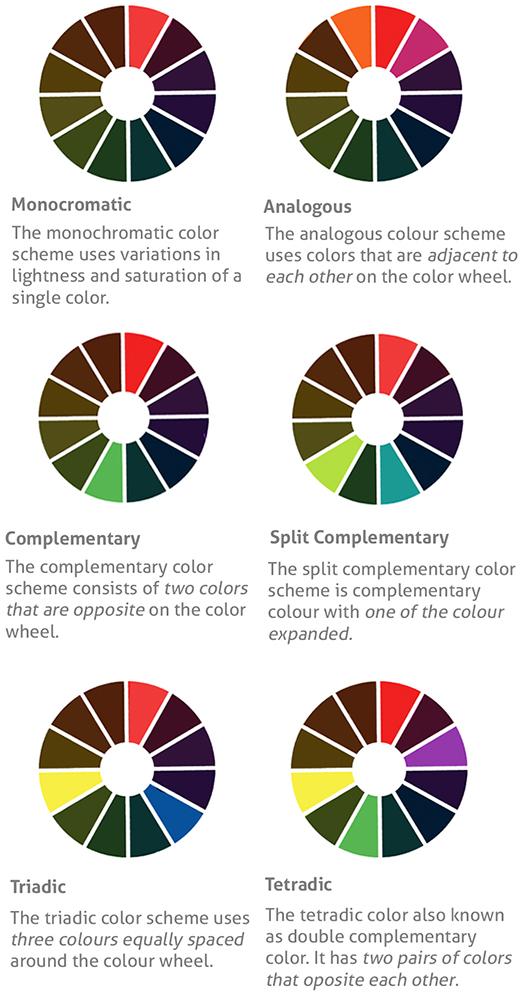
Merely don't forget, color schemes are not only fabricated of combinations of hues, but as well combinations of different values and intensities. These three variables are known as the 3 backdrop of color.
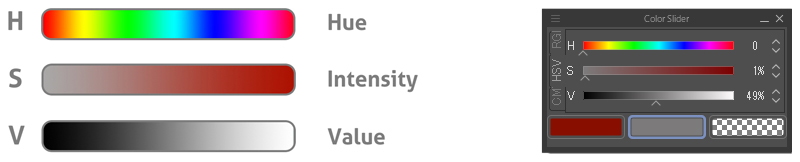
HUE is the traditional color "name", such as "blue" or "yellowish". The hues in the spectrum are traditionally listed as ROYGBIV (ruby, orange, yellow, greenish, bluish, indigo, violet)
INTENSITY refers to the purity of a hue. We also call it saturation or chroma.
VALUE is a degree of lightness or darkness. Every color has value, e.thousand. high valued red will show equally bright blood-red or pink (if has less intensity)
Now with these 3 variables, at that place seems to be an infinite possibility of creating various color schemes. But is in that location really?
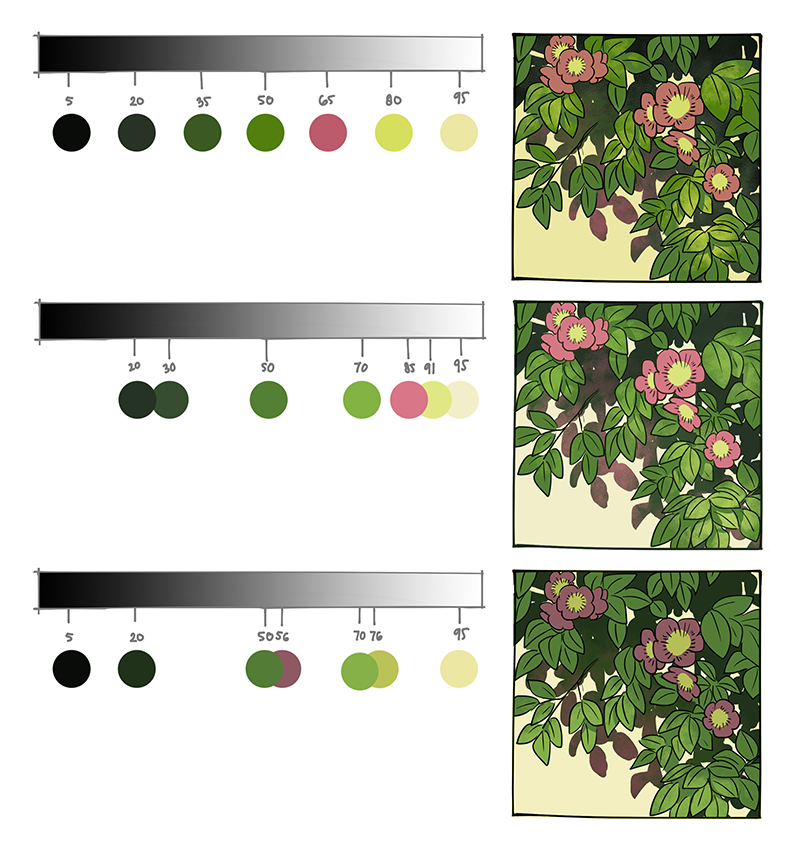
These are some color schemes I used on my analogy with different harmonious colour combinations based on the colour theory graphic to a higher place.
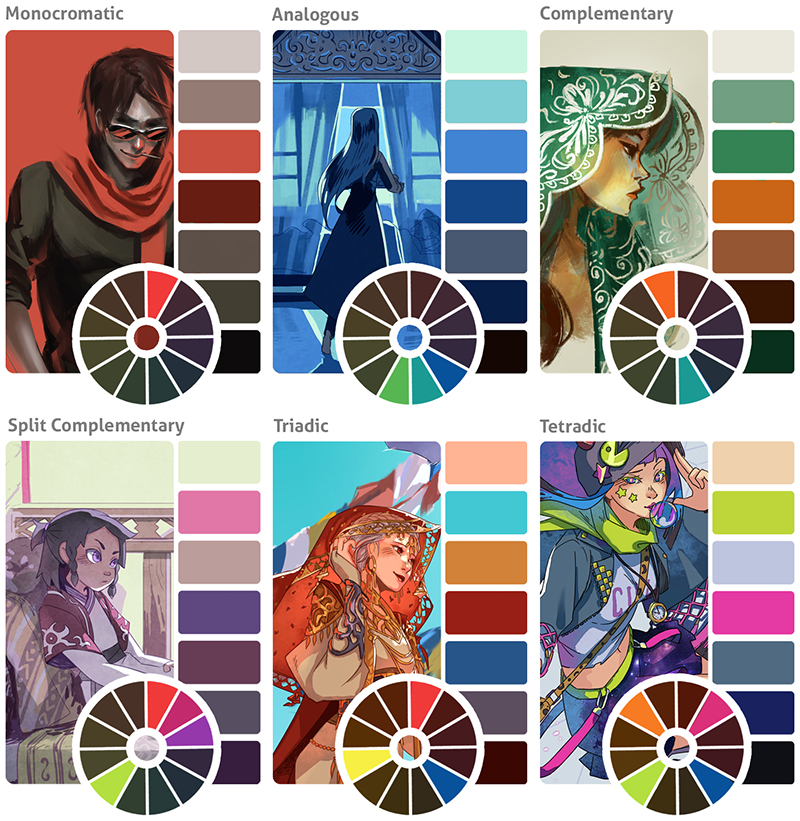
As you can see, as well the different color combinations, I also played with colour intensities and values. Only there are sure rules I always follow when playing with these variables. Tin you see the design earlier I mention it?
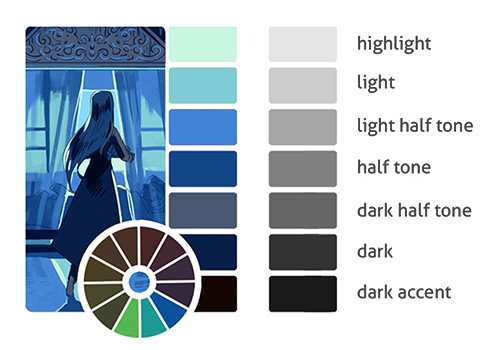
#ane This is optional simply I always arrange a color scheme based on their level of values. This style, it's easier to implement the colors to an illustration or design. For example, dark accent colors are used for lineart, and highlight colors are used for sky, light sources or, well, highlights.
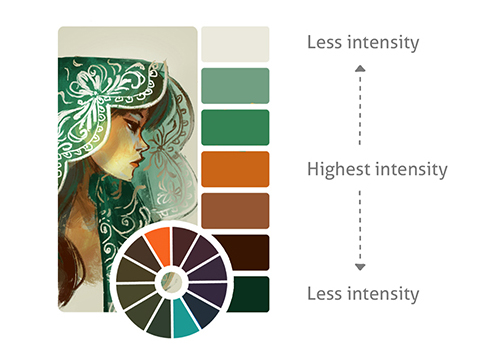
#ii I tend to (but non always) lower the intensity/saturation every time the colour moves toward light or dark. This way, halftone colors are mostly the highest saturated colors in my colour schemes.
#3 Lastly, this is the principal dominion of color, this is a constabulary, not optional:
"If you lot change the value, shift the temperature (hue)!"
To understand this law of color, let's try making an analogous color scheme!
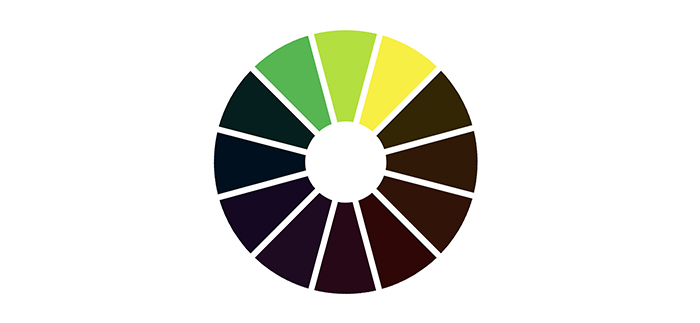
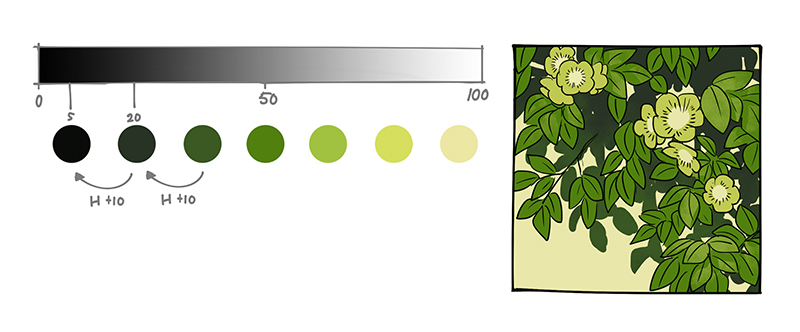
●Let's start with a green color in a halftone (value 50%).
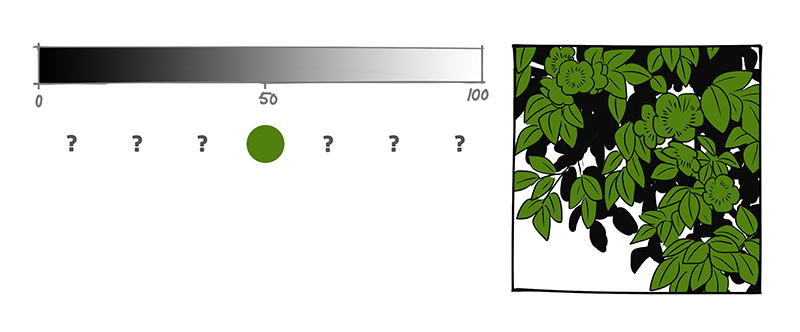
●The colors side by side to it will have college and lower values
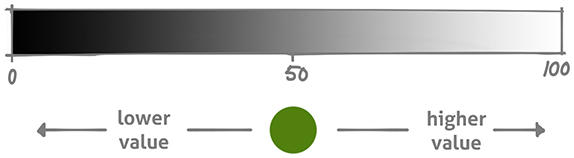
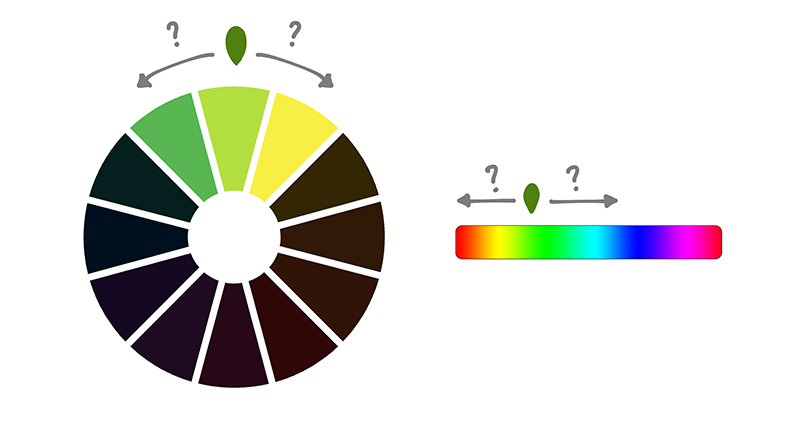
●Here is the position of the greenish colour on the color wheel and hue bar. Based on the law of color, if in that location is a value change, we take to shift the temperature/hue. Merely to which direction?
●Whichever the direction the hue shift, make sure that the management of light and shadow are opposite each other. If you shift the hue for college value to the right, make certain to shift the hue for lower value to the left and vice versa.
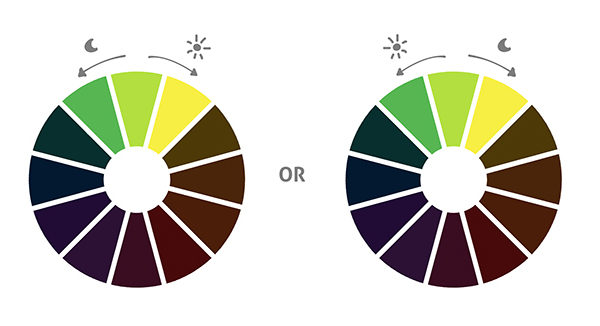
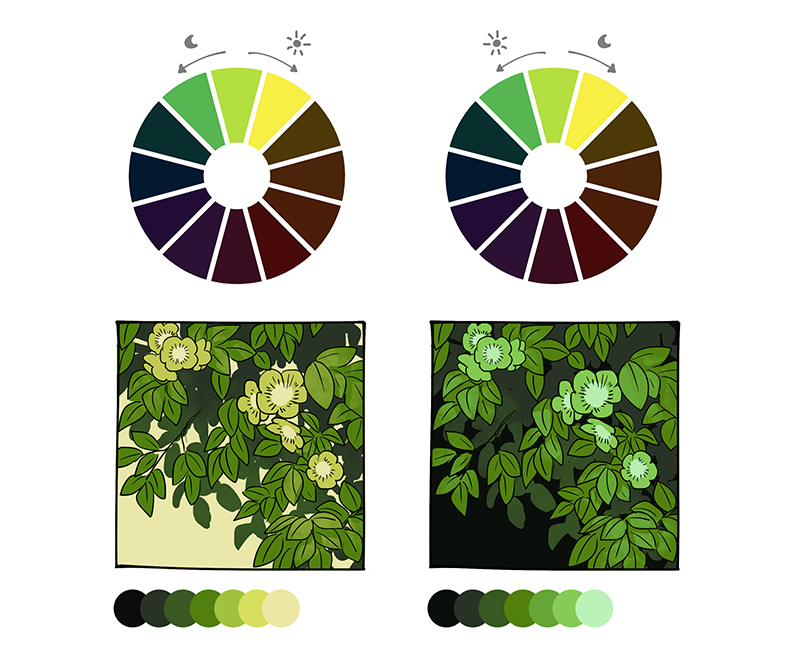
●This leaves u.s.a. with two choices: warmer light with libation shadow OR cooler light with warmer shadow.
permit's choose warmer calorie-free with cooler shadow this time. From the halftone, increase the value, while shifting the hue to the correct (color wheel) or toward xanthous (on hue slider) and nosotros accept a light halftone. Lower the intensity for a natural look.
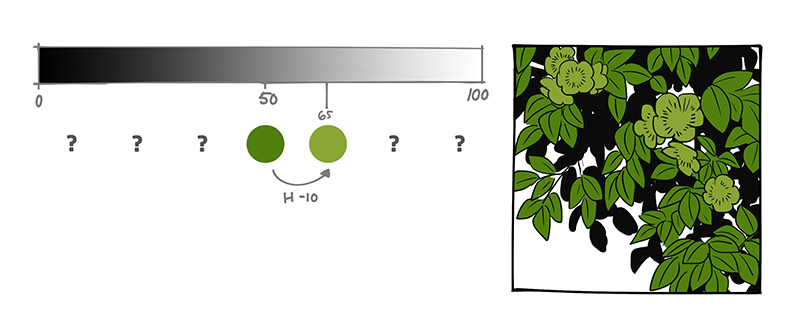
●Practise the same to get light tone and highlight color
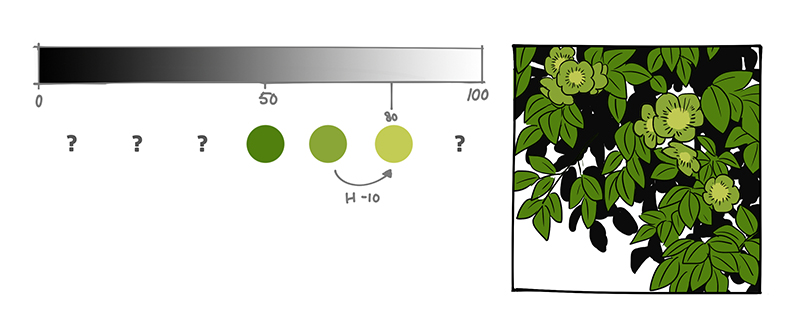
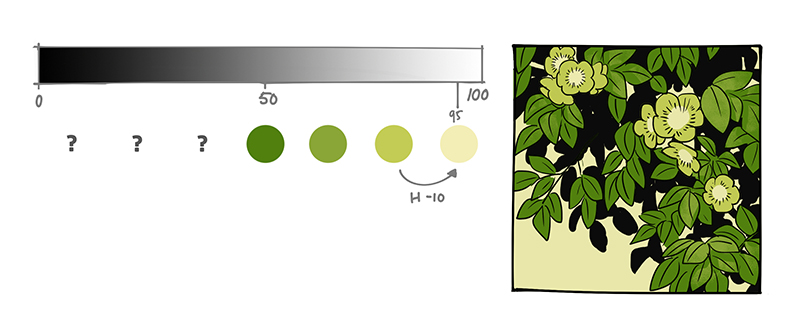
●From the halftone, lower the value while shifting the hue to the left, and we have a night halftone.
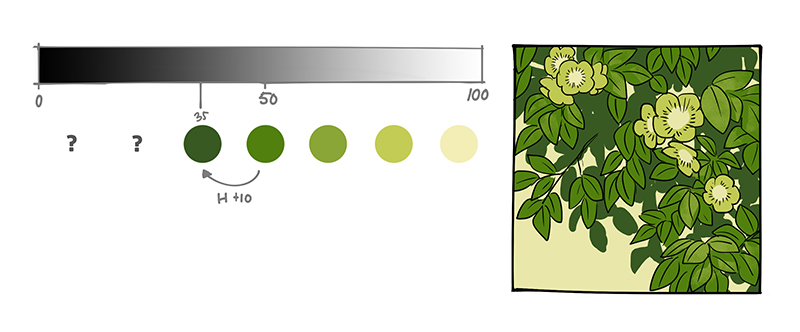
●Do the rest with the same method until y'all go a consummate color scheme.
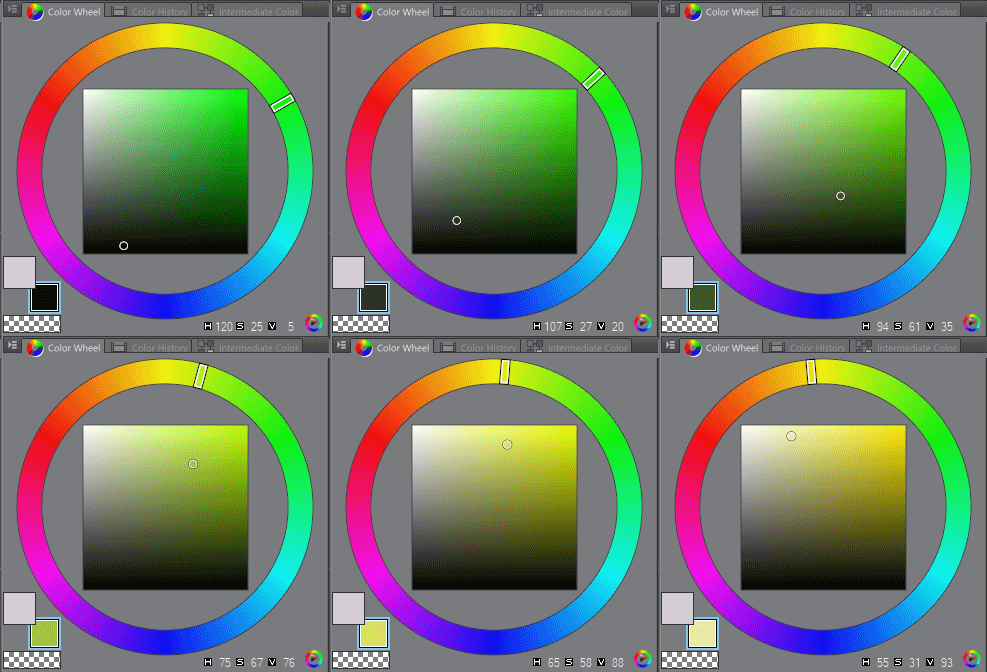
●Value, intensity and hue shift as shown in the CSP color wheel:
●This is the comparing of colour scheme with warmer light and libation light with the aforementioned halftone color. Color schemes with libation light are more suitable for dark environments.
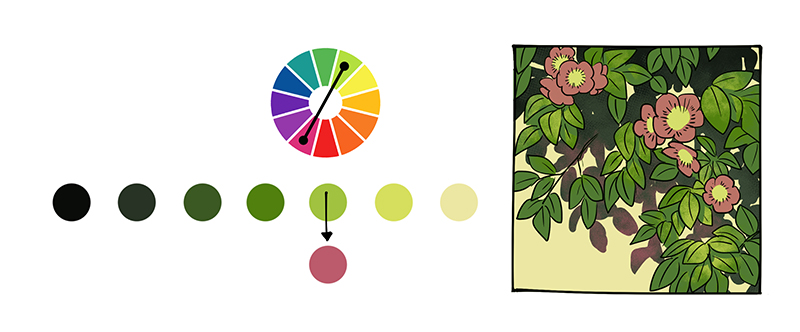
●Complementary colors: Simply replace one color with a complementary colour in this analogous color scheme and information technology will make a adept complementary colour scheme. The complementary of green is magenta.
●Value gaps: I'one thousand using a constant value gaps for the pace by step above, merely feel gratuitous to add variation in gaps to get different mood.
TIPS
#1 Use the RYB color wheel when choosing a color schemes. Color theory is best used with the traditional RYB color wheel. Most colour wheels in cartoon software are RGB.
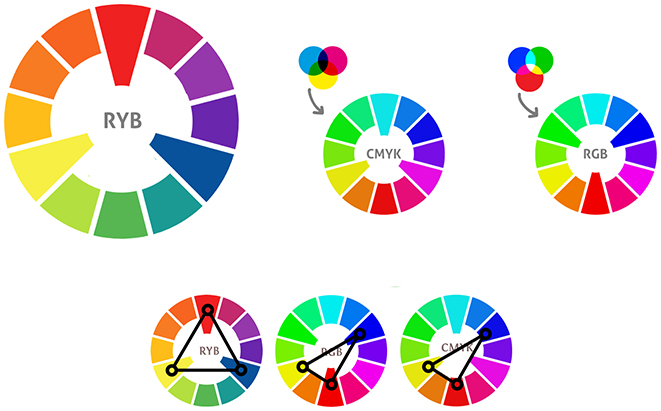
RYB colors are created past mixing three main colors which are reddish, yellow and blue. This color cycle is used in traditional painting for mixing color.
RGB colors are created by mixing carmine, green, blue lite, these colors are often used in lamps, monitors and TVs.
CMYK colors are based on color mixing made by inks used in digital printing.
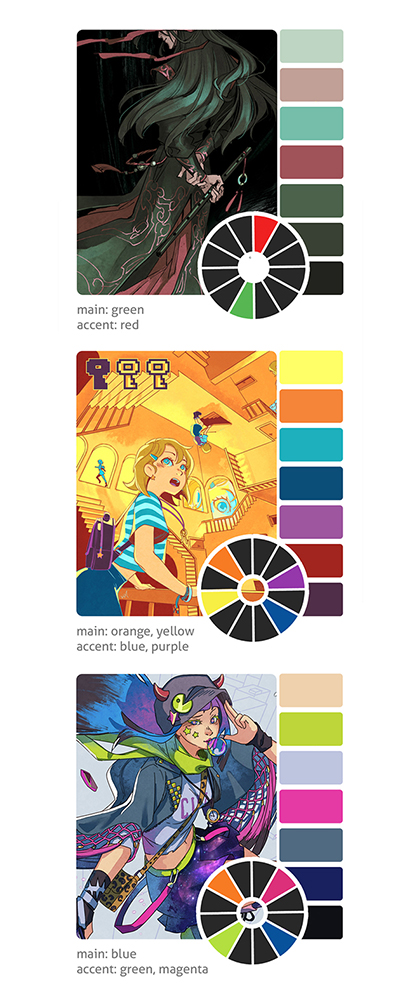
#2 Don't use colors (hues) in equal amounts; choose a colour to be the main ambient and others as accents or complementary colors.
Samples:
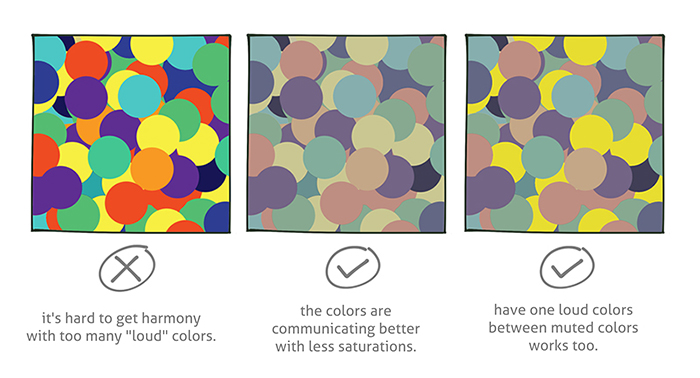
#3 See colors as voices in a room, if all of them are loud and many, it won't be harmonious. Let them calm with depression saturation (low voices). Or let there be one loud voice in with the others muted.
Conclusion

As long as you stick to the basic laws of colour, yous'll be able to make whatsoever beautiful color schemes for your art. Have fun!
Ann Maulina is a comic artist from Republic of indonesia. Her comics are Raruurien (www.raruurien.com) and Varunair. She also works every bit a freelance game concept artist at times. She holds a Bachelor's degree in Visual Communication Pattern, which gives her a high advantage with fine art and design projects. She enjoys creating art while exploring some dynamic and harmonic colors. You can find her at:
- Twitch
- Artstation
- Patreon

Source: https://www.clipstudio.net/how-to-draw/archives/156922
Posted by: loweryprear1947.blogspot.com
0 Response to "How To Draw Environment Concept Art"
Post a Comment